

The Gap Between the Mandate and the Reality
In March 2026, PwC's US CEO told his partners in plain language: get paranoid about AI, or get replaced. "Anyone who thinks they have the opportunity to opt out," Paul Griggs said, "is not going to be here that long." No hedging. No transition period. Just a deadline dressed up as advice.
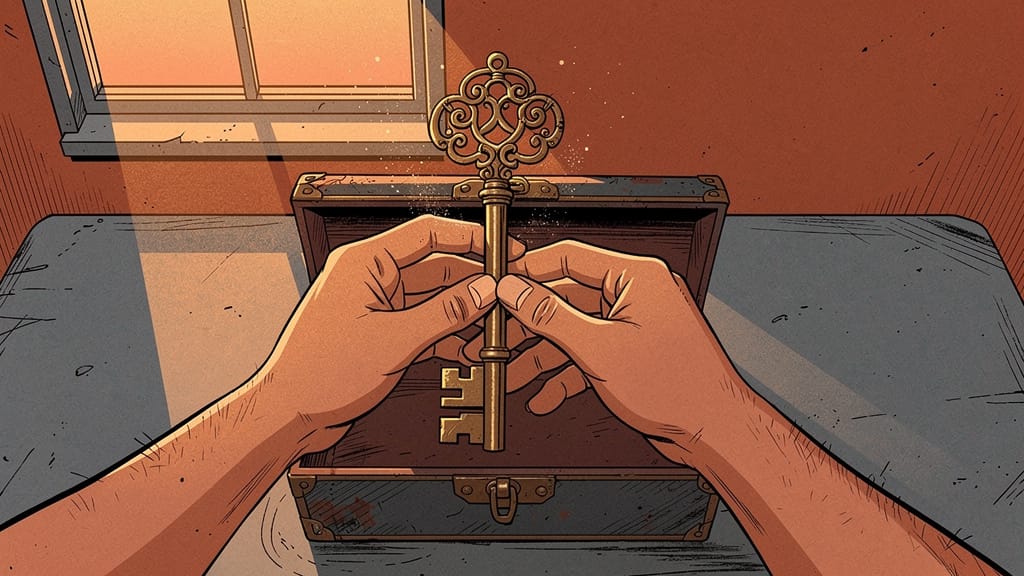
Around the same time, a consultant at a Big Four firm — posting anonymously the way consultants do when they want to tell the truth — discovered something about the AI tool their firm had just rolled out. It could summarize documents. It could brainstorm. It could edit emails. And it came with a disclaimer: for non-client work only. In a job that is entirely client work.
That gap — between what leadership mandates and what the tools actually allow — is where most consultants are living right now. Not in the headlines about billion-dollar AI investments. Not in the LinkedIn posts about being "AI-first." In the disclaimer.
For anyone working in consulting right now, the question is not whether AI is changing the industry. The question is whether your firm is giving you the tools to change with it, or just giving you the pressure.
Why Consulting Is Uniquely Vulnerable
To understand why the gap exists, you have to understand what consulting has always sold — and what AI is doing to the price of it.
Alan Paton spent years as a partner in PwC's financial services division, specializing in artificial intelligence and cloud. He had a front-row seat to what was coming. So he left. Not because he panicked, but because he did the math. He became CEO of Qodea, a Google Cloud consultancy, and in his first year posted 296% sales growth with a tenfold increase in average contract size. His one-sentence thesis explains both why he left and why his bet paid off: "If the way you deliver a service is based on the number of people you have, you're really vulnerable."
That vulnerability is specific to consulting in a way it isn't for most industries. Consulting firms charge for time. They staff engagements with large cohorts of junior analysts who research, format, and synthesize data — all under the supervision of senior professionals who bill at higher rates. The whole model assumes that intellectual labor is expensive and that clients need humans to do it. AI collapses that assumption at the base.
If the way you deliver a service is based on the number of people you have, you're really vulnerable.
— Alan Paton, CEO of Qodea and former PwC Partner
PwC now projects 32% fewer entry-level associates by 2028, with audit hiring down 39%. Accenture cut more than 11,000 jobs in a single quarter while simultaneously reporting $5.1 billion in new AI bookings — displacement and investment announced in the same earnings call. McKinsey's internal AI tool, Lilli, is now used by more than 75% of employees and automates research, document synthesis, and slide creation. That is the base of the pyramid. When the base disappears, the math stops working.
This is not a story about individual workers being replaced. It is a story about a business model becoming uneconomic. And the people caught in the transition are not the partners who set strategy or the clients who benefit — they are the consultants in the middle.
If you are in a role that involves significant research aggregation, deck formatting, first-draft analysis, or structured data processing, you are in the base of the pyramid. That is not a moral judgment. It is a map.
What It Actually Feels Like From the Inside
Knowing the model is breaking is the structural story. The lived story is stranger — because the tools meant to manage this transition are themselves creating new problems on the ground.
Start with the disclaimer problem. At Deloitte, the internal AI tool Sidekick is restricted to non-client work, and ChatGPT is blocked firm-wide. A consultant who needs help synthesizing client data must either do it manually or find a workaround. More than half of employees who lack necessary AI tools say they will find and use alternatives anyway — which, in consulting, means routing client data through unauthorized channels. That is not a productivity story. That is a compliance incident waiting to happen.
Then there is the expectation ratchet. "AI keeps raising the bar of clients' expectations," one consultant wrote on r/consulting, "and it's getting exhausting." The mechanism is simple and brutal: AI makes consultants faster, clients see what AI can produce in demos and marketing materials, and they adjust their expectations upward. The productivity gain from the tool goes to the client's inbox, not the consultant's calendar. Working smarter looks, in practice, like working faster and then doing more of it.
The management-frontline gap runs underneath all of this. BCG's 2025 AI at Work survey of more than 10,600 white-collar workers found that only 51% of frontline employees use AI regularly, compared to more than 75% of leaders. Only about one-quarter of frontline workers say they actually receive strong leadership support for AI adoption — yet that support is what drives positive sentiment about AI from 15% to 55%. The technology does not transform the experience. The organizational context does.
Smaller firms are noticing. West Monroe's Chief Commercial Officer reports that the firm's win rate is higher than it has ever been, and that its pipeline now includes a new wave of talent — leadership candidates from the Big Four who are specifically excited about joining organizations that can adopt AI faster. Same technology. Entirely different experience depending on where you sit.
The tools your firm provides, the training it invests in, and whether it has solved the client-data compliance problem are not abstract policy questions. They determine whether AI is a competitive advantage for you or just a new source of friction with a corporate logo on it.
The Learning That Disappears With the Work
The compliance friction and the expectation gap explain why so many consultants feel stuck. But they do not explain the deeper career question: what happens to the people who were supposed to grow into the senior roles when the grunt work that taught them is gone?
KPMG cut 33% of its graduate roles. Deloitte, EY, and PwC reduced junior hiring proportionally. The pipeline is narrowing at exactly the moment when the profession needs to be figuring out how to develop the next generation without the traditional training mechanism.
Here is how that mechanism worked: a junior consultant who spent three years building financial models, formatting decks, and synthesizing research did not just produce deliverables. They built the pattern recognition that eventually becomes senior judgment — the ability to read a client's unspoken hesitation, sense when a theoretically correct answer will fail because of organizational politics, know which data points matter and which are noise. AI can produce the deliverables. It cannot transfer the pattern recognition.
The most interesting thing happening right now isn't AI replacing consultants — it's that AI-exposed roles will change much faster than others.
— Jarrod Chan, UK-based consulting professional
Jarrod Chan, a UK-based consulting professional who has written directly about this dynamic, puts it plainly: "The most interesting thing happening right now isn't AI replacing consultants — it's that AI-exposed roles will change much faster than others." The word that matters is change, not disappear. Change requires navigation. But the navigation is harder when the path that used to lead upward — grind through the analysis, earn your way into client conversations, build judgment through repetition — has been rerouted without a clear replacement.
This problem is sharpest in audit and tax, where structured task sequences were the explicit training mechanism. But strategy, organizational change, and technology consulting face their own versions of it. Any practice where junior staff learned by grinding through deliverables before earning client-facing responsibility is now missing a rung on the ladder.
If you are mid-career, this matters even if your own role feels stable. The consultants coming up behind you are developing less through doing. That judgment gap becomes your staffing problem in five years.
The Question That's Actually Yours to Answer
The structural argument, the daily friction, and the development gap all point toward the same place — and it is not the industry level. It is yours.
Here is the reframe that the disruption headlines tend to skip: the right question is not "will AI replace me?" It is "which parts of my specific role are AI-exposed, and which require the kind of judgment that AI still cannot replicate?" That distinction is available to you right now, without waiting for your firm to tell you.
Chan's framing of differential exposure is the most useful lens in the research: some roles will change fast, others more slowly, and the divide runs through tasks, not titles. Three questions can sort your situation quickly.
First, which tasks in your current work are research aggregation, formatting, or structured synthesis that an AI tool could do in a fraction of the time? Second, which tasks require reading a client's unstated concern, managing stakeholder politics, or making a call under genuine ambiguity — where being wrong has consequences the AI does not bear? Third, are your clients already expecting AI-level speed from work that still requires human oversight, and is your firm giving you the tools to deliver it, or just the pressure?
Your answers sort your role into what will change fast, what provides durable value, and whether your organization is set up to make the transition work for you or just for its own margins. This is not about becoming an AI expert. It is about having a clear picture of where you stand before the mandate arrives and catches you off-guard.
What the Disclaimer Actually Tells You
Paton did not leave PwC because he panicked. He left because he had done the analysis that the mandates are now demanding of everyone who stayed. He could see that a service model built on headcount was structurally vulnerable, and he decided to build something that wasn't. The result was 296% growth in year one.
The Big Four consultant from the opening is still inside the system, working around a disclaimer, doing client work manually while the firm calls itself AI-first. Neither of them is wrong about their situation.
The difference between Griggs' ultimatum and the disclaimer is not hypocrisy — it is lag. Leadership sees where the model is going. The tooling, the training, and the compliance infrastructure have not caught up. For the consultant in the middle, that lag is the working condition. It is not a reason to panic, and it is not a reason to feel reassured by billion-dollar investment announcements. It is a reason to know exactly where you stand.
This week, write down five tasks you completed in the last two weeks. For each one, ask honestly: could an AI tool have done 80% of this in a quarter of the time? If yes, that task belongs in the exposed column. If no, write down specifically why not — what did the task require that the tool could not provide? That list, not any certification or course, is your starting map. Build it not to panic, but to position.
The mandate is real. So is the disclaimer. What you do with the distance between them is the only part that's actually yours to decide.
Recommended Tools & Resources
Building Career Agility and Resilience in the Age of AI
Concise 30-minute course on reimagining your career as AI reshapes industries — covers developing human skills that stand out and harnessing AI in your current role.
DataCamp
Hands-on learning for data science, AI, Python, and SQL — built for working professionals who want real skills, not just theory.
Make
The visual no-code automation platform for connecting apps and building AI-powered workflows — more powerful than Zapier at a fraction of the cost.


