

Courtney Johnson had been an executive assistant for over 15 years — Blackstone, Dimension Capital, C-suites that expected everything managed and nothing explained. She was good at her job. And she was tired of waiting. No executive, she wrote, was ever going to walk into her office, drop a confidential initiative on her desk, and say she'd proven herself worthy. So she stopped waiting. Without a coding background and without asking permission, she built a custom AI system for her own workflows, launched a free weekly Zoom session called AI for Admins, and watched it grow to over 400 members globally. She turned the tool that was supposed to threaten her job into the thing that changed her career.
Not everyone's story goes this way. In the same period, a number of executives tried the opposite approach — cutting their human assistants entirely and handing the work to AI agents. The results landed in the research record: autonomous scheduling systems double-booking investor meetings, AI email tools sending terse, context-free responses to key partners. Researchers called these empathy failures. The technology hadn't malfunctioned. The judgment was just missing. The time executives thought they'd saved was spent cleaning up the damage.
These two outcomes aren't abstract future scenarios. They're already in the hiring data and salary reports. The first thing to understand is exactly which parts of the job are under pressure — and which are quietly becoming more valuable.
The Tasks That Are Actually Under Threat
AI isn't threatening the administrative role as a whole. It's automating the tasks that assistants tend to like least, while the tasks requiring judgment, relationships, and discretion are commanding measurable pay premiums.
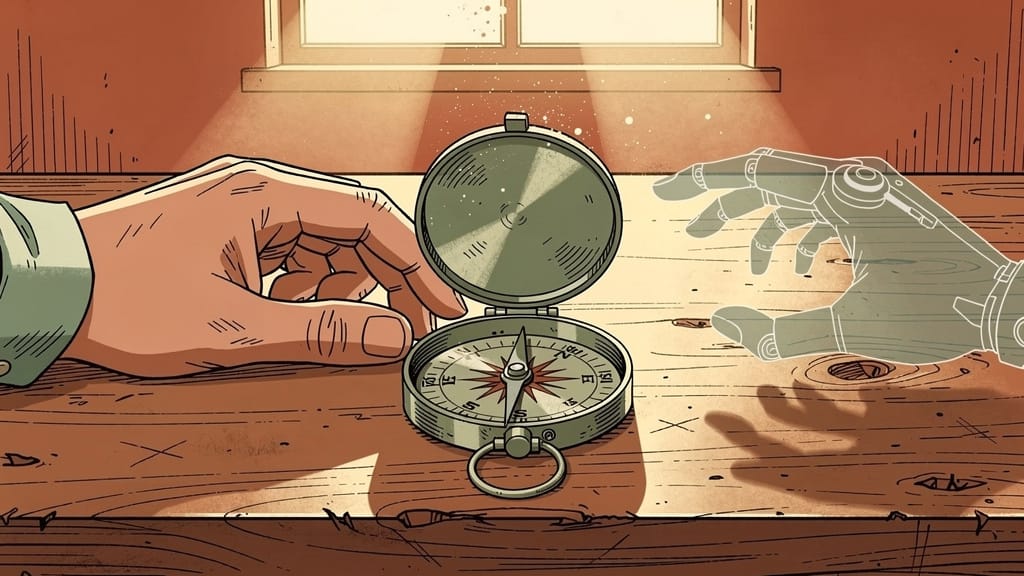
Here's what's already happening. Meeting transcription, routine scheduling, email triage, and first-draft correspondence are the current high-automation targets. Otter.ai's user data puts a number on it: 62% of users report weekly time savings of at least four hours from AI meeting transcription alone — more than a full month of reclaimed time annually. The same pattern holds for expense report entry, document formatting, and social calendar coordination. These are tasks that eat hours and generate little strategic value. And AI is increasingly good at them.
These AI tools are a stepping stone towards career development because they're going to fundamentally change this role.
— Fiona Young, Founder of Carve
The tasks moving in the opposite direction — toward higher compensation and greater employer demand — share a specific profile. They require reading what isn't said. The 2026 Vimcal report on the EA profession found that when asked which soft skill matters most, EAs overwhelmingly cited reading people's body language, tone, and unspoken cues. That skill — the one that tells you a key partner needs a phone call rather than an email, or that a scheduling conflict carries political weight — is what the cautionary cases in this article's opening lacked entirely. Not because the AI malfunctioned, but because no AI was ever designed to notice it.
That gap between what tools produce and what humans correct is not a flaw to be engineered away. It's where the salary premium lives. Admins with demonstrated AI and data experience earn up to 25% more than peers without those skills in the same role, according to Addison Group's 2026 hiring data. The equation is becoming clear: automate the tasks you'd rather not do, and deepen your expertise in the ones you're uniquely equipped to handle.
Every admin role contains this mix, regardless of industry. A legal admin's routine document formatting is as automatable as an EA's meeting-note transcription. A marketing coordinator's social scheduling is as vulnerable as a finance admin's expense report entry. The upgrade path — toward judgment, discretion, and relationship management — runs the same direction across all of them.
Knowing what's being automated is only half the picture. The labor market right now is sending signals that are genuinely contradictory — hiring is up, but so is the structural pressure. Understanding both is what lets you plan rather than panic.
What the Hiring Data Actually Shows
The admin job market in 2026 is genuinely contradictory: near-term hiring demand is the strongest in over a decade, while long-term structural forces are accelerating. The contradiction resolves only for people who use the window while it's open.
Start with the counterintuitive number. Employers posted more than 772,600 administrative jobs in 2025 — up 9% from 2024 — and 54% of hiring managers say finding skilled admin professionals is much harder than a year ago, according to Robert Half's 2026 market analysis. Demand is highest where complex coordination is non-negotiable: professional services, healthcare, financial services. The "AI is replacing everyone right now" narrative doesn't match what's in the job listings.
But the longer-term signal is harder to dismiss. A March 2026 survey of approximately 750 CFOs — conducted jointly by the Wall Street Journal and the National Bureau of Economic Research — found that executives expect AI to reduce their company headcount by roughly 0.4% in 2026. That's a small number. The direction is not ambiguous, though: CFOs were twice as likely to cite administrative and clerical roles as displacement targets compared to any other category.
The impact is arriving at entry level first, which matters more than it might seem. A November 2025 study by Erik Brynjolfsson and researchers at Stanford's Digital Economy Lab found a 16% decline in early-career employment across the most AI-exposed occupations since ChatGPT launched in late 2022. That's not a cliff — it's a slope. And it starts at the bottom of the career ladder before working its way up.
Courtney Johnson's 400-member community exists precisely because the window is still open, not because it always will be. Mid-career admin professionals who build AI fluency now are differentiating themselves in a market where that skill is still rare enough to command a premium. In two or three years, it may simply be the baseline expectation.
The data tells you where the market is heading. The people who have already made the crossing — from task executor to strategic partner — can show you what the path actually looks like, not just what the projections say.
The Upgrade Path Requires No Credentials
The assistants who have successfully made this transition share a specific approach. They started small, in low-stakes contexts, and they treated AI fluency as a craft to build rather than a certification to obtain. No prerequisite skills. No employer permission required.
Fiona Young, founder of Carve and the creator of the first AI-focused course for executive assistants in 2023, gives the same piece of advice to every EA she works with: start in your personal life first. Use an AI chatbot to plan a trip, build a habit, or navigate a cultural question before you touch a single work task. The reasoning is practical, not philosophical. You build prompting confidence without risking corporate data, and you discover how these tools actually behave before the stakes are real. Her framing: AI tools are a stepping stone toward career development because they're going to fundamentally change the role — but the first step should feel safe enough to actually take.
Monique Helstrom, former EA to Simon Sinek and now a recruiter and coach specializing in executive assistant placement, took that principle and built structure around it. She developed a library of 68 specific prompts covering travel coordination, email strategy, business management, and communication — making AI behavior predictable and auditable rather than a grab-bag of unpredictable outputs. Her principle is direct: AI is a tool. There should always be a human in the loop. That matters because the cautionary cases from this article's opening failed precisely when that principle was abandoned.
AI is a tool. There should always be a human in the loop.
— Monique Helstrom, Leadership Coach and former Executive Assistant to Simon Sinek
Both Young and Helstrom, independently, converge on the same governance instinct. The upgrade isn't about replacing your judgment with a tool. It's about using the tool to free your judgment for the work that actually requires it.
The market has already priced in this distinction. According to Robert Half's 2026 salary data, 83% of administrative and customer support hiring managers offer higher salaries to candidates with specialized AI skills than to those without them in the same role. The premium isn't theoretical. It's already in the offer letters being sent today.
Young's personal-life-first approach works regardless of industry or role level. A healthcare admin nervous about HIPAA exposure can practice prompting on personal tasks. A legal secretary worried about confidentiality can build prompting skills on non-sensitive workflows first. The on-ramp is a mindset, not a tool recommendation.
What You Can Do This Week
Courtney Johnson didn't wait for her company to hand her a strategy. The 400 people in her community didn't either. That's the only thing separating the two stories in this article's opening.
The 9% hiring increase and the 25% salary premium aren't projections about 2030 — they're already in the job listings that exist right now. The window is open. The question is whether you're on the side making moves or watching from the other side wondering what changed.
This week, spend 20 minutes using any AI writing or summary tool on one task you currently do manually — a draft email, a meeting recap, a research question. Don't aim for perfect output. Note what took less time and what needed your judgment to fix. That gap — between what the tool produced and what you corrected — is your competitive advantage. Name it, own it, and make it visible in your next performance conversation.
The people who shaped this transition started with one task. The ones it happened to were waiting for a better moment that didn't come.
Recommended Tools & Resources
Lindy
Modular AI agents that handle scheduling, meeting notes, and email ops — start free and build automations without writing code.
Building Career Agility and Resilience in the Age of AI
Concise 30-minute course on reimagining your career as AI reshapes industries — covers developing human skills that stand out and harnessing AI in your current role.
Notion
The all-in-one workspace for notes, docs, and project management — with built-in AI for drafting, summarizing, and brainstorming.


