


The median blogger with an active, monetized site and verifiable traffic earns $437 a month. Not $437 before they found their footing—$437 right now, among people already doing this full-time or part-time with real traffic to prove it. That number comes from a 2026 survey of 300 operators who had to demonstrate their income and analytics to even be included. More than half of them earn under $500 monthly. About 1.5% earn over $10,000.
Here's what makes that number worse: the survey only captured people still in the game. Everyone who launched a site, published for six months, got no traction, and quietly stopped isn't in the data. The real base rate is almost certainly lower than $437.
Here's what makes it more interesting: Jon Dykstra left a law partnership in 2012 to build niche content sites full-time. By December 2019, his company reported $55,493 in revenue against $17,828 in expenses. He didn't get there by publishing a few articles and hoping. He used agencies for content, hired a strategist, managed multiple sites with in-house writers, and ran the whole thing as a publishing operation, not a side hustle. The opportunity is real. It's just not the one most people think they're signing up for.
The Full Distribution Is More Honest Than Any Average
That $437 median is a single point on a curve that tells a much more complete story. From the same 2026 survey: 22% of active bloggers earn under $100 a month. Another 31% land between $100 and $499. Climb further and only 14% earn between $1,000 and $2,499 monthly. The top 6% earn $5,000 or more.
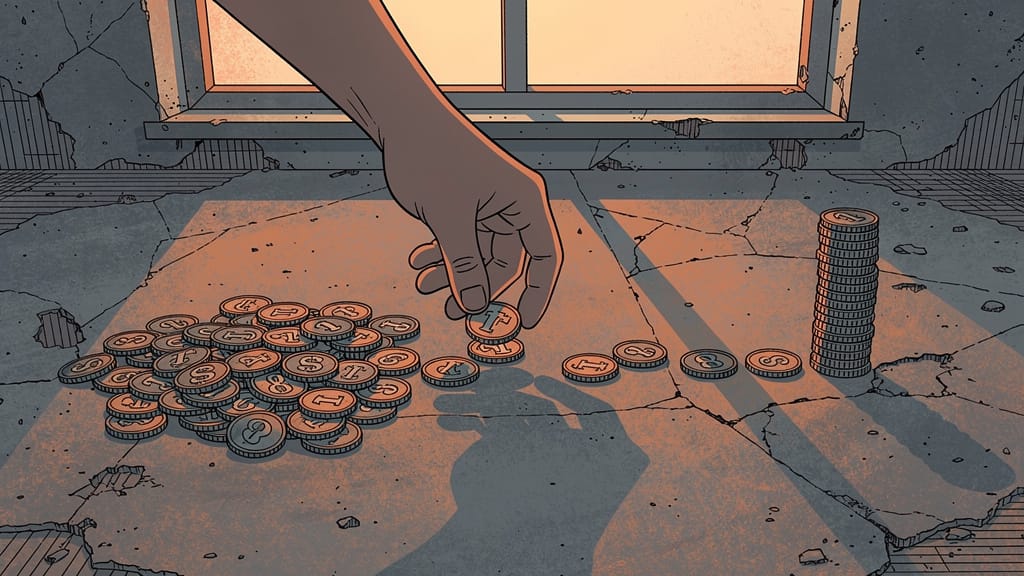
This is a power-law distribution, not a bell curve. Most people earn very little. A small upper tail earns dramatically more. The distribution looks like almost every other internet business model, which is worth knowing before you assume that average skill and average effort produce average results.
The timeline data makes the picture even clearer. The Productive Blogging income survey, which covers its own audience of newsletter subscribers, students, and community members, reports a median of 12 months to earn a first dollar and a median of 48 months to reach full-time income. A 2024 edition of the same survey found a 36-month median to full-time income. Both versions put the timeline in years, not months.
This timeline applies whether you're a marketer, an HR professional, or a project manager exploring content as a pivot. The 12-month-to-first-dollar figure isn't niche-specific. It reflects how long it takes for search algorithms and direct traffic habits to form around a new site. Whatever domain expertise you bring may compress that window slightly. It won't eliminate it.
If you need income in the next six months, this vehicle isn't right for you. If you're building toward a three-to-four-year horizon with staged investment and a real strategy, the data doesn't say it's impossible. It says most people aren't operating at the level where it works.
The Two Forces Eroding the Model Right Now
The timeline problem is real, but it's not the most dangerous assumption in this business. The most dangerous assumption is that ranking in Google is the same as owning your audience. Two forces are systematically eroding that assumption, and understanding both of them is the difference between building a fragile bet and a durable business.
The first is AI search summaries. Pew Research Center tracked 68,879 actual Google searches by 900 US adults in March 2025 and found that around 18% of searches produced an AI-generated summary. When users encountered one, they clicked a traditional search result only 8% of the time. Users without an AI summary clicked nearly twice as often, at 15%. Links inside the summaries themselves were clicked in just 1% of visits. Ranking and clicking are no longer equivalent.
The second is algorithmic volatility. Bryan Collins spent several years building a publishing operation with freelancers and an editorial team, earning multiple five-figure monthly incomes in the process. Then some of his sites lost 90% of their traffic after Google's September 2023 Helpful Content Update and subsequent core updates. He sold most of his portfolio in early 2024. His verdict: "The glory days of monetizing solely via SEO and paid ads are over. Niche sites can still work, but the gold rush is over."
The glory days of monetizing solely via SEO and paid ads are over. Niche sites can still work, but the gold rush is over.
— Bryan Collins, former niche website publisher
Dykstra faced the same market conditions and made a different choice. He stayed. His operation survived in part because he had diversified traffic sources beyond pure search and had structured the business as an actual publishing company with multiple revenue streams, not a collection of pages waiting for ad impressions. Both Collins and Dykstra built real businesses. One chose to exit; one chose to adapt. The difference wasn't content quality. It was operational structure.
A site that depends entirely on one search engine and one ad network isn't a business. It's a bet with a single counterparty.
This risk isn't unique to bloggers. Anyone building an audience-dependent business—newsletter writers, LinkedIn creators, local service businesses relying on Google Maps—faces the same concentration problem. If one platform controls your entire distribution, you're a tenant, not an owner.
The Earnings Data Doesn't Predict Your Outcome—Your Honest Answers Do
Before you register a domain or buy a keyword tool, work through these questions. Each one connects to something in the research.
Do you have first-hand experience or original information in this topic, not just the ability to research it? Google's own guidance emphasizes accuracy and added user value. Sites that merely restate existing information are most exposed to AI summary substitution.
Can you tolerate 12 to 18 months of near-zero income? The median to a first dollar is 12 months. The median to full-time income spans 36 to 48 months across two survey editions.
Do you have a distribution plan that doesn't depend entirely on Google? Pew found AI summaries cut click-through rates nearly in half for a growing share of searches.
Luck still matters. You can follow best practices and write great content but pick a terrible niche.
— Jamie I.F., niche site operator
Can you separate the cheap technical stack—a $10 domain, $5 hosting—from the actual cost of a competitive content operation? One outsourced five-site portfolio spent $3,208 on content in a single month while earning $2,417 in revenue that month.
Are you building an owned audience—email list, direct traffic, community—or just publishing pages? GrowthBadger's survey of over 1,100 bloggers found that high earners are more than twice as likely to focus on email subscribers, and 70% are active or very active promoters compared to only 14% of lower-income bloggers.
Is there a monetization path that doesn't require hundreds of thousands of pageviews? The same GrowthBadger research found that 45% of bloggers earning over $50,000 per year sell their own product or service, compared to just 8% of lower-income bloggers. Display advertising requires premium network scale before meaningful rates apply.
Could your business survive a 50% to 90% traffic loss? Thousands of niche blogs experienced losses in that range after the 2023 to 2024 Google updates. Collins sold his portfolio after some sites hit 90% losses.
These questions apply to any content-led business model, not just blogs. A LinkedIn creator, a newsletter writer, and a niche-site operator all face the same seven filters. The medium changes. The prerequisites don't.
If you answered yes to five or more, the opportunity is worth serious investigation. If you answered yes to fewer than three, there's a cheaper way to learn what you're actually trying to learn—and that's not a failure, it's a smarter allocation of your time.
What the Difference Between $437 and $55,493 Actually Looks Like
Jon Dykstra and Bryan Collins operated in the same market, through the same algorithm upheavals, with comparable levels of investment and effort. One sold most of his portfolio and pivoted to agency work and a personal brand. One stayed and built. Both decisions were right—because both were made with accurate self-knowledge about what kind of operator each person was and what kind of business they'd actually built.
The $437 median isn't a ceiling. It's a description of what happens when people treat this like a content project instead of a small media business. The operators above that median aren't luckier. They're running a different operation: multiple distribution channels, owned audiences, products or services alongside ads, and the discipline to measure profit and owner-hours rather than page count and monthly revenue screenshots.
Before you register a domain or buy a keyword tool, do one audit first. Write down your specific audience, their recurring problem, how you'd reach them without Google, and how one visitor becomes economic value. If you can't fill in all four columns, you don't have a business plan yet—you have a content idea. Those are different things, and only one of them is worth the 36 to 48 months the data says it takes.
The opportunity is real. It's just not the one most people think they're signing up for.
Recommended Tools & Resources
RightBlogger
AI toolkit built specifically for bloggers — unlimited AI writing, SEO reports, and full blog automation for solo creators, marketers, and agencies.
Beehiiv
The newsletter platform built for creators who are serious about growth — run a paid newsletter, manage subscribers, and monetize your audience.
SE Ranking
All-in-one SEO platform with the best white-label capabilities for agencies — custom domain, branded reports, and client dashboards under your brand.


