

In 2023, a hotel in Phoenix installed self-check-in kiosks and AI chatbots. Within a year, Valerie Gills — 32 years old, three years on the front desk — was out of a job. "I've seen firsthand how many co-workers were swapped for kiosks or chatbots," she told Fortune. "These times with automation and AI feel very unreliable."
If you work a front desk, that sentence probably landed somewhere specific. Because the same tools that displaced Valerie are now being marketed to your employer's competitors, and possibly to your employer directly. AI receptionist products now handle roughly 147 calls per day — about three times what a human manages — and cost as little as $600 a year against $30,000 or more for a salaried role. The economics are not subtle.
But here is what the Valerie story leaves out. Across the UK, a GP named Dr. Satpal Shekhawat deployed the exact same category of AI — an automated phone receptionist — and his human receptionists are still at the front desk. "Any practice needs receptionists," he said flatly, "because when patients walk in, you need somebody on your front desk." Same technology. Different outcome. The difference was not the AI. It was what his practice decided the AI was for.
That distinction is the entire subject of this article, and it is the one thing that is actually within your reach.
But before that choice arrives at your desk, it helps to know exactly what the machine is already good at — and precisely where it keeps failing. Because those two things define the shape of whatever comes next.
Your Job, Broken Into Thirds
The fear that "AI will take everything" is paralyzing because it is vague. The data tells a more specific story — one you can actually use.
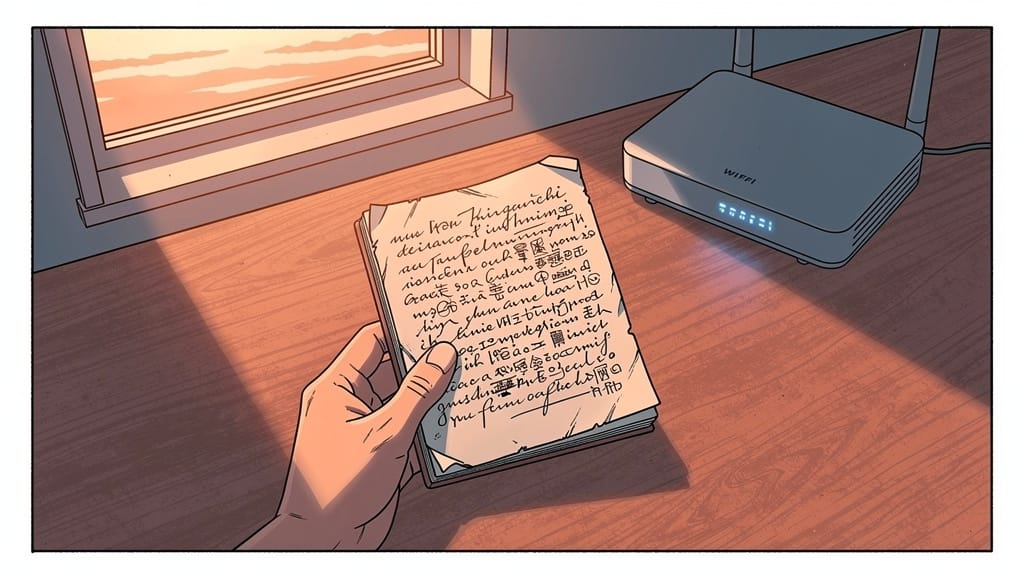
Think of your current role in three tiers. The first tier is already largely gone at employers who have deployed. Call answering, appointment scheduling, intake scripts, after-hours coverage, reminder calls — this is the high-volume, rule-bound layer that AI handles efficiently and cheaply. The numbers here are stark: after deployment, AI answer rates climb from 71% to 99.7%, and the throughput advantage is roughly three-to-one over a human. If your employer hasn't made this move yet, they've probably at least looked at the price tag.
The second tier is encroaching now. First-line triage, FAQ responses, lead qualification, basic insurance verification — the work that requires a little more judgment than pure scheduling but still follows a predictable script. Here's the most important single number in this entire article: AI currently resolves about 73% of inbound calls without escalating to a human. That means 27% still require a person. The 73% is growing. The 27% is not disappearing.
Retraining workers and preparing them for new jobs needs to be better supported by the system. These times with automation and AI feel very unreliable and constantly changing.
— Valerie Gills, former hotel receptionist
The third tier is where things get interesting. Escalation handling, physical presence, relationship continuity, emotional de-escalation, complex problem-solving, institutional memory — this layer is not shrinking. It is getting more valuable. The evidence: Forbes, drawing on Robert Half data, found that 29% of organizations that cut staff for AI have already rehired into the same roles. The reason? AI covered roughly 60% of job duties and failed the remaining 40% that depended on human judgment and relationships.
The losing strategy is defending Tier 1. The winning strategy is knowing which Tier 3 tasks you already own and making sure they're visible.
Think about last week at your desk. Which calls required a judgment call that a script couldn't have made? Which patient, client, or guest needed a person — not just an answer? Those moments are Tier 3. They are your professional argument. This framework holds whether you work in a hotel, a dental practice, a law firm, or a trades business. The specific tasks differ — "handling a distressed guest at 2 a.m." in hospitality, "catching that a medication request needed a follow-up question" in healthcare, "reading a new client's emotional state on intake" in legal — but the underlying skill category is identical: human judgment at the moment the AI cannot escalate itself.
Knowing the map is one thing. But the most dangerous moment isn't when the AI arrives — it's when the employer asks you to help build it. Because that is exactly what happened next at a small clinic, and what no migration playbook warned anyone about.
The Two Failure Patterns Nobody Talks About
A receptionist in her 50s at a small clinic spent several weeks feeding an AI system her call scripts and correcting its responses. Once the system was stable, the clinic told her the AI could now handle everything she used to do "for far cheaper" — and let her go the same day. Her daughter posted online: "She literally trained the thing that replaced her."
That is the first failure pattern. Not a dramatic layoff announcement — a quiet onboarding process that gradually made the human redundant, positioned internally as "lightening her workload" until the moment it wasn't.
The second failure pattern runs in the opposite direction. Fionnuala O'Donnell, practice manager at Gordon House Surgery in West London, deployed an AI phone receptionist in late 2025 to handle 350 to 400 daily calls she couldn't staff for. It worked — until it transcribed the patient named "Peter" as "Pizza" and responded to "I need medication" with no follow-up question about which medication. By May 2026, O'Donnell triggered the contract's break clause and gave the AI two months' notice. Her explanation: "It's not functioning to the extent that we expected it to function." Her receptionists are being recruited again.
Since July last year, we've lost five out of six receptionists that we've recruited.
— Fionnuala O'Donnell, Practice Manager, Gordon House Surgery
Same product category, same problem it was supposed to solve — and a two-month exit clause that most employers don't think to negotiate in advance.
Two failure patterns, both documented and real: the worker who built the thing that replaced her, and the employer who discovered the AI couldn't actually do the job. Both are avoidable, but only if you see them coming.
For you, specifically: if your employer asks you to "help train" a new AI system, ask one question in writing before you begin — "What is my role after the system is live?" The answer, or the silence, is the information you need.
Here is what the Gordon House case actually proves, though: the AI failed on the 40% that required human judgment — the medication name, the escalating patient, the person who just needed to speak to someone. That 40% is not a bug in the deployment. It is the structural argument for why receptionists who actively own Tier 3 work are not just surviving this transition — some of them are advancing through it.
The Job That's Actually Available
Valerie Gills didn't wait for the system to account for her. After losing her Phoenix hotel job, she enrolled in software development and data analytics boot camps. She now works as a blog editor intern while building credentials in the field whose tools displaced her. The move was hard, uneven, and not yet finished. But she was unsentimental about it: "These times with automation and AI feel very unreliable and constantly changing, but I guess we just have to learn how to adapt."
Her path required a significant pivot. Yours may not.
The Bureau of Labor Statistics projects approximately 128,500 receptionist job openings per year through 2034, with overall employment showing "little or no change." The headline sounds neutral, but the subtext matters: the openings exist because turnover is high and the role persists. What's changing is the skill mix required to fill those openings credibly. The positions that are filling are not the ones defending Tier 1 work. They are the ones anchored in the judgment, presence, and relationship continuity that AI demonstrably cannot replicate.
Recall Dr. Shekhawat's framing of his own deployment: "The idea was to support them, so it frees up their time so they can do other things." The practices and employers that frame it this way are the ones worth working for — and worth pushing your own employer toward, before they make the choice without you in the room.
The skills becoming more valuable are not new skills. They are the skills good receptionists already use. The gap is naming them, building on them deliberately, and making them visible to the people making deployment decisions. In healthcare, that looks like "catching that a patient's medication request needed a follow-up question." In hospitality, it looks like "de-escalating a distressed guest when the system couldn't." In legal, it looks like "reading a new client's emotional state on first intake and adjusting the conversation accordingly."
You may already be doing all three. The question is whether anyone knows you're doing them.
What the Job Is Becoming
Which brings the whole picture back to the question that opened this article — not "will AI take my job?" but "what is the job becoming, and am I moving toward it or away from it?"
Valerie Gills is still in the middle of her transition. She hasn't finished the boot camp. The blog editor internship isn't the destination. The move she made was not clean or complete — it was just a move, made before the situation made it for her. That is the only part of her story worth imitating: she moved before she was ready, rather than waiting until she had no choice.
The receptionist role is not disappearing — it is separating. One version is being absorbed by software that costs $600 a year and never misses a call. The other version requires someone who can read a room, catch what the script missed, and hold the moment when the algorithm runs out of answers.
This week's exercise: pull up last week's calendar or call log and find one moment that required a judgment call — something a script couldn't have handled. Write one sentence describing what you did and why it required a person. Do that for three moments. What you have is the beginning of a skills inventory that no AI product can generate for you. That inventory is your professional argument — for your current employer, for your next one, and for yourself.
The machine is very good at the job that was. The job that's coming is still yours to define.
Recommended Tools & Resources
Building Career Agility and Resilience in the Age of AI
Concise 30-minute course on reimagining your career as AI reshapes industries — covers developing human skills that stand out and harnessing AI in your current role.
How to Use AI to Supercharge Your Job Search
Practical 2-hour course on using AI to write resumes, craft cover letters, and prepare for job interviews — the best of a weak category for AI job search courses.
Jobscan
Optimize your resume to beat AI applicant tracking systems — shows exactly which keywords you're missing for any job listing.


