

Tyler Jacobsen had a hunch his hiring process was broken. So he did something unusual: he created a fake candidate and applied to 80 open roles at his own company, then watched what happened. Or mostly didn't happen. Applications stalled. Interviews took two weeks to schedule. Good candidates — the kind who also had options — moved on.
Jacobsen is the Senior Director of Talent Acquisition at Extra Space Storage, a self-storage company with 8,000 employees across 42 states. What he did next is exactly what's making recruiters anxious right now: he replaced most of his team's top-of-funnel work with an AI agent. Screening, scheduling, FAQ responses — handed off to software that runs 24 hours a day. Time-to-hire dropped from 30 days to 17. Early turnover fell 10%. And his recruiters? They stopped processing applications and started interviewing people.
That shift — from processing to judgment — is what AI agents are actually doing to recruiting right now. Not eliminating the job. Splitting it. The administrative half of a recruiter's day is being automated faster than most people realize; the human half is becoming more valuable. The question isn't whether this will happen to you. It's which half of your job you're building toward.
What an AI Recruiting Agent Actually Does
Most coverage of AI in recruiting glosses over the mechanism — the moment-to-moment change in what actually happens during a workday. So it's worth being specific.
There's a meaningful difference between AI that assists a recruiter and AI that acts without one. Most companies are still on the wrong side of that line. AI assistance means a tool surfaces a recommendation and waits for a human to pull the trigger. Agentic AI means the system executes — it screens a candidate, schedules an interview, answers a question at 11pm on a Saturday — without anyone initiating the action.
John Higgins, VP of Talent Management at Essentia Health, a 15,000-person health system serving rural Minnesota, Wisconsin, and North Dakota, experienced this distinction in a single moment. His team deployed an AI agent to handle candidate scheduling. "Within 49 seconds, we had our first candidate self-scheduled for an interview," Higgins said. "And it was unbelievable because no one other than the candidate drove that process." Before the agent, his team spent three days scheduling what the system now handles in 29 minutes. While that was happening, the agent also answered 134,000 candidate questions that would otherwise have landed in a recruiter's inbox.
That's not a faster version of the old workflow. That's a different workflow entirely. And it applies well beyond healthcare. Any recruiting function processing more than 20 applications a week — retail, logistics, financial services, tech support — contains work that's already in an agent's queue at a competitor.
There are not enough healthcare candidates. You have to do things better than the competition to provide a better candidate experience.
— John Higgins, VP of Talent Management, Essentia Health
According to the 2026 Gartner CIO and Technology Executive Survey, only 17% of organizations have actually deployed AI agents to date, while more than 60% plan to do so within two years. Most companies are still running AI-assisted recruiting, not agentic recruiting. The efficiency gap between those two modes is enormous — and the companies already on the agentic side are pulling ahead.
What the Evidence Actually Supports
Before getting to what this means for your career, it's worth being honest about where the data is solid and where it isn't.
The productivity gains from AI agents in recruiting are real and well-documented. At Elara Caring, a home healthcare company that hires 17,000 aides across 50 branches, deploying a voice AI screening agent saved 400 recruiter hours per month and cut the time from application to offer from 6.1 days to 2.7. Those numbers come from Anne Strickroot, VP of Talent Acquisition, presenting at an industry conference — not a vendor press release alone. The Essentia Health scheduling results are similarly verifiable. These outcomes hold up under scrutiny.
The cost-reduction claims are murkier. SHRM's 2025 benchmarking data puts average cost-per-hire at $4,700 — roughly where it stood before the pandemic, barely moved by successive waves of recruiting technology. Applicant tracking systems, job boards, programmatic advertising, LinkedIn Recruiter: each wave promised cost reduction. None delivered it in any lasting way.
And deployment itself carries real risk. Gartner warns that over 40% of agentic AI projects will be canceled by 2027, primarily due to poor governance planning rather than bad technology. A Greenhouse study found that 70% of candidates weren't told AI was involved in their interview — which is both an ethical failure and a growing legal exposure in California, New Jersey, and Illinois, all of which enacted or amended algorithmic discrimination regulations in late 2025 and early 2026.
The technology works in specific conditions: high-volume roles, repeatable screening criteria, strong ATS integration. It fails when deployed without governance, without bias auditing, and without a clear answer to the question of what a human reviews before any decision is made. For a recruiter, this matters in two directions: your job may change because of AI, but your company could also deploy AI badly and leave you holding the compliance liability. Understanding where the hype ends is career protection, not just intellectual hygiene.
The Split That's Already Underway
Which brings the question back to the recruiter in the middle of this shift: if the administrative half of the job is genuinely going to agents, what exactly is the human half worth — and what does it look like?
Anne Strickroot's story at Elara Caring offers the clearest answer. A year ago, her boss asked how many people she'd need to hire 600 workers a month in a single state. She'd already emailed back: 19 people — two-thirds recruiters, one-third background checkers. Then, halfway through a conference presentation on voice AI screening, she pulled out her phone and texted him: "I think we have another way."
The insight wasn't about cutting headcount. It was about a fundamental mismatch her team had been working around for years. Their candidates — home health aides working early mornings and late nights — weren't reachable during a standard workday. The AI agent had no off hours. Forty percent of completed screenings happened on evenings or weekends. That's not work the agent did faster than a human. It's work humans physically couldn't do.
What's changed most for our recruiters isn't the volume. It's that they're now focused on the conversations that actually require a human.
— Anne Strickroot, VP of Talent Acquisition, Elara Caring
After deploying the voice agent, Strickroot's team freed 400 recruiter hours per month. Where those hours went, in her words: "the conversations that actually require a human."
The tasks that moved to the agent share a profile: repeatable, schedulable, answerable without judgment. The tasks that stayed human share a different profile: reading ambiguity, closing a reluctant candidate, coaching a hiring manager who keeps rejecting everyone for reasons they can't articulate, catching the edge case the scoring rubric didn't anticipate. Neither list is surprising. But seeing them written against each other makes the transition legible — and legible means navigable.
This split maps onto any recruiter role, in-house, agency, or RPO. The sourcing coordinator spending four hours a day on scheduling logistics is deep in the administrative track. The business partner advising a VP on why a search keeps failing is firmly in the judgment track. Most recruiters currently work both tracks. The question is which one they're building toward.
What the Job Market Is Already Telling You
That split is showing up in one of the most concrete places possible: the job postings for recruiters themselves.
HR job postings mentioning AI doubled in a single year — from 4.4% to 8.8% by December 2025, according to Indeed Hiring Lab's January 2026 labor market update. This happened against a backdrop of weak overall hiring, with total US job postings only 6% above pre-pandemic levels. The AI-fluency demand is rising even as general recruiter demand is flat or declining. The market is already pricing in a skill that most recruiters don't yet have.
Jobs requiring AI skills now carry a 56% wage premium on average, according to PwC data cited in AgentMarketCap's 2026 analysis. For recruiters, the practical implication isn't that you need to build AI agents from scratch. It's that you need to be the person who knows what the agent should and shouldn't be allowed to touch — and can explain why.
This isn't a "learn Python" moment. The emerging competency is operational: understanding how to configure a screening workflow, recognize when the agent is producing biased or incorrect outputs, and explain a hiring decision to a candidate who asks why they were filtered out. That skill lives much closer to existing recruiter expertise than most people realize. It's less about coding and more about judgment applied to a system instead of a candidate.
The Version of the Job That Survives
Tyler Jacobsen described what his team does after the AI agent runs the top-of-funnel process: they handle "a few critical human touchpoints." It's worth sitting with that phrase. Not "most of the work." Not "the creative parts." A few critical touchpoints.
That's the honest version of where the job is going — and it's not nothing. It's closing candidates who have options. It's coaching a hiring manager who keeps rejecting everyone for reasons they can't articulate. It's catching the edge case the agent's scoring rubric missed. Those moments require everything an AI agent lacks: judgment, relationship, the ability to read what someone isn't saying.
The recruiter who thrives in this transition isn't the one who fights the technology or disappears behind it. It's the one who decides what the machine is allowed to touch — and can defend that decision when it matters.
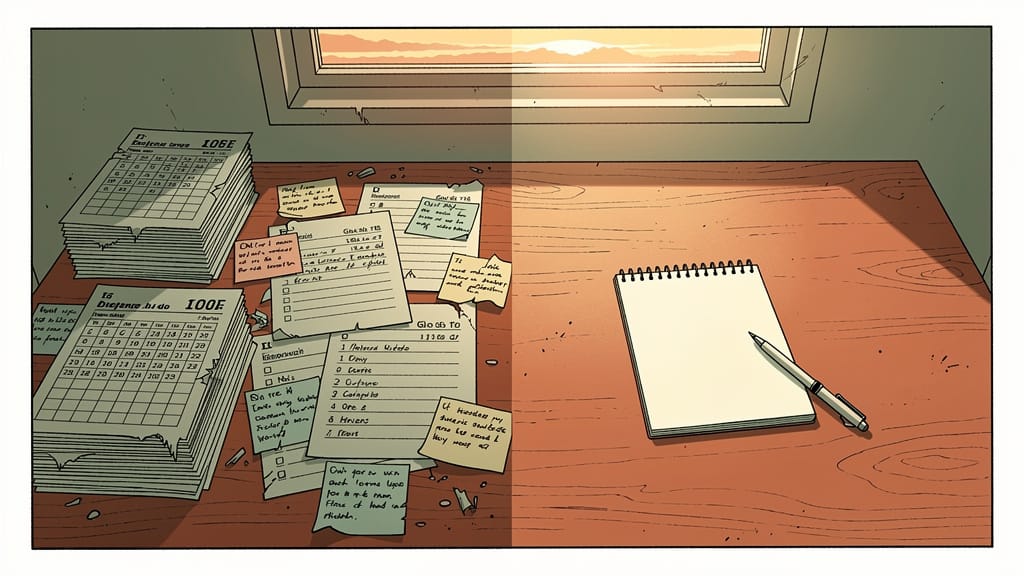
Here's an audit worth running this week: take your task list from the past five days and sort every item into one of two columns. Left column: repeatable, rule-based, schedulable — the agent's lane. Right column: required judgment, reading a room, or depended on a relationship — your lane. If most of your week is in the left column, you're in the most exposed position. If you're already living in the right column, you're closer to the job that survives than most people think.
The job isn't gone. But the version of it that runs on volume and throughput alone is going fast — and the version that runs on judgment is hiring.
Recommended Tools & Resources
Building Career Agility and Resilience in the Age of AI
Concise 30-minute course on reimagining your career as AI reshapes industries — covers developing human skills that stand out and harnessing AI in your current role.
Lindy
Modular AI agents that handle scheduling, meeting notes, and email ops — start free and build automations without writing code.
n8n
Open-source workflow automation with deep customization — connect any app and build complex automations without locking into proprietary tools.


